

56 Days in Terrorists’ Den: Survivor Recounts Brutal Killings, Torture, Faith Under Siege
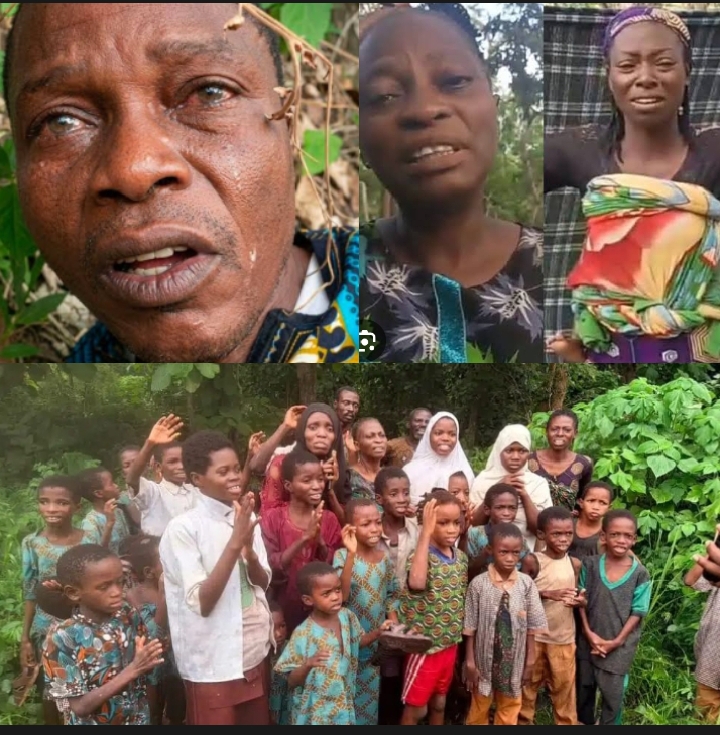
The horrifying account of Mr. Zacheaus Olatunde, one of the victims abducted by terrorists on May 15, 2026, has shed fresh light on the gruesome reality of life inside a terrorist camp, where two fellow captives, Mr. Michael Oyedokun and Deacon John Olaleye, lost their lives in cold blood after weeks of unimaginable suffering.
His testimony paints a disturbing picture of brutality, fear, starvation and psychological torment endured by dozens of captives, including women and children, during their 56-day ordeal in captivity.
The Mistake That Cost a Teacher His Life
According to Olatunde, the tragedy that claimed the life of Mr. Michael Oyedokun began shortly after the victims were taken into the forest.
The terrorists ordered every captive to surrender their mobile phones. While everyone appeared to comply, the abductors later discovered that Mr. Oyedokun still had a phone hidden in his pocket.
One of the terrorists riding with him confronted him immediately and slapped him before reporting the incident to their superior.
Olatunde disclosed that the terrorist camp had two commanders, a General Commander and a Camp Commander. Upon hearing that one of the captives had allegedly disobeyed his directive, the General Commander became enraged and reportedly declared that someone must pay with his life.
Global Mirror News gathered that the following day, Mr. Oyedokun was taken away from the group.
His desperate cries for mercy echoed through the camp as the terrorists dragged him away.
“His voice was loud while he begged for his life, but after some time, the cries suddenly stopped,” Olatunde recalled emotionally.
Moments later, one of the teenage terrorists, estimated to be between 17 and 18 years old, reportedly returned dancing and singing in celebration of the teacher’s killing.
Deacon Killed Over Military Operations
Weeks later, tragedy struck again.
On June 7, Deacon John Olaleye was also executed.
According to Olatunde, the terrorists claimed they had repeatedly warned that security forces should not move closer to their camp.
When they believed military operations had intensified around them, they blamed the captives and decided to kill Olaleye.
Like Mr. Oyedokun, he was taken away from the others before being murdered.
“We did not witness the actual killing. They always took victims away before carrying out such evil acts. We only heard the screams,” Olatunde recounted.
Chained, Blindfolded and Humiliated
Beyond the killings, Olatunde described life inside the terrorist camp as a daily struggle for survival.
For the entire 56 days, the captives were reportedly kept inside makeshift tents, chained, handcuffed and blindfolded.
Even the most basic human needs became privileges they had to beg for.
Whenever they needed to urinate or defecate, they had to seek permission from their captors.
The terrorists frequently relocated the hostages from one hideout to another, making rescue operations even more difficult.
Physical assault was common.
“We were often beaten with guns, and sometimes we suffered punishment for offences committed by little children among us,” he said.
Faith Forbidden Inside the Camp
One of the most disturbing revelations from Olatunde’s account was the apparent hostility towards Christian worship.
He said the terrorists were deeply committed to observing their own religious practices.
“They never joked with their prayers. Whenever it was time to pray or recite the Quran, they did so without fail,” he said.
However, the captives were reportedly forbidden from praying.
According to him, anyone caught praying or calling on Jesus was mercilessly beaten.
The terrorists allegedly insisted they did not want to hear Christian prayers inside the camp.
More Than Money
Contrary to widespread assumptions that kidnapping is driven mainly by financial motives, Olatunde said the terrorists repeatedly insisted that money was not their primary demand.
Instead, they reportedly wanted individuals arrested by security agencies to be released.
According to him, their captors frequently stated that the freedom of their detained members mattered more than ransom payments.
Hunger, Fear and Survival
Food was scarce throughout their captivity.
The victims were fed mainly plain rice mixed with red oil, often without pepper or salt.
Occasionally, the terrorists provided bush meat after hunting animals such as deer and grasscutters.
Despite the harsh treatment, Olatunde said something changed after the killing of Deacon Olaleye.
The terrorists reportedly became less violent after learning that some of their own family members had been taken into custody during military operations.
“They stopped some of the cruelty and began treating us better,” he recalled.
The Unexpected Freedom
After nearly two months in captivity, the terrorists suddenly informed the captives they would be released.
According to Olatunde, the abductors explained that they were releasing them because security forces had allegedly arrested members of their families.
They hoped freeing the hostages would encourage the release of their relatives.
Before sending them away, the terrorists directed them through a specific route.
They instructed the captives to cross two streams, assuring them that soldiers would be waiting on the other side.
The journey was difficult.
Many of the children had become too weak to walk.
Olatunde said he personally carried several of them across the streams until they eventually reached waiting security personnel.
“The children were very weak. I carried almost all of them because they could barely continue the journey,” he said.
Justice Begins to Unfold
Following their rescue and arrival in Ibadan, military officers reportedly showed Olatunde photographs of suspected terrorists.
He successfully identified one of his captors.
Security officials informed the survivors that eight suspected terrorists had been arrested, while several others had been neutralised during military operations.
Although grateful to have regained freedom, Olatunde said the joy of survival remains incomplete.
“We thank God that we survived, but our hearts remain heavy because Mr. Michael Oyedokun and Mr. John Olaleye did not return home with us,” he said.
A Painful Reminder
The testimony offers a sobering glimpse into the cruelty endured by kidnap victims across Nigeria and underscores the emotional scars that remain long after physical freedom is regained.
Beyond statistics and headlines, Olatunde’s account reminds the Nation that every abduction leaves behind families grieving, survivors battling trauma, and communities yearning for lasting peace and stronger security.
Background: How the Oyo School Abduction Unfolded
The nightmare began on Friday, May 15, 2026, when heavily armed terrorists stormed schools in the Ahoro-Esiele and Yawota communities of Oriire Local Government Area, Oyo State, throwing the peaceful agrarian communities into chaos.
The coordinated attack targeted Community High School, Ahoro-Esiele, Baptist Nursery and Primary School, Yawota, Community Grammar School, and L.A. Primary School, where the gunmen abducted dozens of pupils, teachers and other school workers after arriving on motorcycles and overpowering the communities.
Eyewitnesses said the attackers shot dead an assistant headmaster and a commercial motorcyclist who reportedly resisted attempts to surrender his motorcycle. They also seized a vehicle belonging to the vice-principal before setting it ablaze along their escape route.
The attack sparked Nationwide outrage and revived painful memories of previous mass school kidnappings in Nigeria.
In an emotional interview shortly after the incident, the school principal described the invasion as one of the darkest moments in the history of the school, saying teachers watched helplessly as terrified pupils were marched into the forest by gun-wielding terrorists.
Parents and relatives maintained a daily vigil, hoping for positive news while appealing to the Federal Government, the Oyo State Government and security agencies not to relent until every captive returned home safely.
Days into the ordeal, the crisis took a tragic turn after a disturbing video surfaced showing the killing of Mathematics teacher Mr. Michael Oyedokun, confirming fears that one of the abducted teachers had been executed by the terrorists. Governor Seyi Makinde later confirmed the development and assured residents that both kinetic and non-kinetic strategies were being deployed to rescue the remaining captives.
For the next 56 days, families endured uncertainty, prayer vigils and emotional trauma as security forces intensified operations around the forest where intelligence indicated the victims were being held.
Their long wait finally ended in July when the surviving captives regained their freedom after spending nearly two months in the terrorists’ den. The operation also led to the arrest of several suspects linked to the abduction, while security authorities disclosed that a number of the terrorists had been neutralised during the rescue efforts.
Yet, amid the joy of reunion, there remained an irreplaceable loss. The return of the survivors was overshadowed by the deaths of Mr. Michael Oyedokun and Deacon John Olaleye, whose final moments, now recounted by fellow survivor Mr. Zacheaus Olatunde, have become haunting reminders of the brutality endured by innocent Nigerians in captivity.
As investigations continue and security agencies intensify operations against terrorist groups, the memories of those who never returned, Mr. Michael Oyedokun and Deacon John Olaleye remain a painful reminder of the human cost of insecurity.