

THE PRICE OF BREATH
Inside Nigeria’s Growing Battle With Adult-Onset Asthma
By Adenike Fayomi-Olowe
At 2:17 a.m., the wheezing begins again.
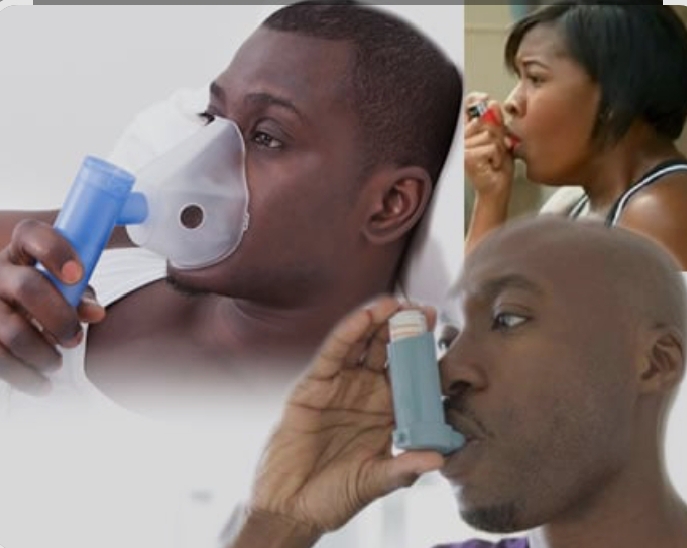
Adewale, a 52-year-old transporter living in Lagos, sits upright on his bed, struggling to pull air into his lungs. The fan is on, the windows are open, but his chest feels sealed shut. His breathing becomes shorter, faster, louder. Beside him lies a blue inhaler he now carries everywhere, from bus parks to church services.
“I never had asthma as a child,” he says. “This started when I was already over 40.”
For years, Asthma in Nigeria was largely viewed as a childhood condition, something children “outgrow.” But Doctors are increasingly warning about a different and growing reality: Adults with no previous history of Asthma are now developing the disease later in life, often with more severe symptoms and at significantly higher financial cost.
The condition, known as Adult-onset asthma, is emerging as one of Nigeria’s overlooked non-communicable health challenges, worsened by pollution, stress, poor air quality, delayed diagnosis, and the rising cost of treatment.
And for many patients, the crisis is not only medical. It is economic.
What exactly is Adult-onset Asthma?
Adult-onset Asthma refers to Asthma that develops in adulthood, typically after the age of 20. Unlike childhood asthma, which is often linked strongly to genetics and allergies, Adult-onset asthma can appear suddenly in people who have never experienced breathing problems before.
Doctors say it is often more persistent and harder to control than childhood asthma.
The disease causes inflammation and narrowing of the airways, making it difficult for air to move in and out of the lungs properly. During an attack, patients may experience wheezing, chest tightness, coughing, and severe shortness of breath.
For some Nigerians, symptoms begin gradually with persistent coughing at night or breathlessness during simple activities like climbing stairs. Others experience sudden attacks that send them rushing to emergency rooms.
Unfortunately, many adults do not initially suspect asthma.
In Nigeria, symptoms are frequently mistaken for malaria, catarrh, stress, pneumonia, or ordinary fatigue. Some patients spend months or even years, using antibiotics, cough syrups, herbal remedies, and self-medication before receiving the correct diagnosis.
Why are more Nigerian Adults developing Asthma?
Respiratory specialists point to a combination of environmental and lifestyle pressures.
Nigeria’s Urban centres, particularly Lagos, Port Harcourt, Kano, and Onitsha, expose residents to heavy air pollution daily. Exhaust fumes from vehicles, generator smoke, industrial emissions, open refuse burning, and dusty roads all contribute to long-term irritation of the airways.
Indoor pollution is another major trigger. Millions of households still cook with charcoal, firewood, and kerosene in poorly ventilated spaces. Continuous exposure to smoke damages the lungs over time.
Work environments also play a role. Factory workers, welders, cleaners, mechanics, farmers, hairdressers, and construction workers are regularly exposed to chemicals, dust, fumes, and strong odors capable of triggering asthma.
Stress, obesity, smoking, strong perfumes, mold, cold weather, respiratory infections, and untreated allergies may also increase the likelihood of developing Asthma later in life.
For women, hormonal changes during pregnancy or menopause may contribute to adult-onset asthma as well.
The signs Nigerians should never ignore
Many Asthma patients say they ignored their symptoms initially because they seemed minor.
Doctors warn that the following signs should never be dismissed:
- Persistent coughing, especially at night.
- Wheezing or whistling sounds during breathing.
- Chest tightness or heaviness.
- Shortness of breath after mild activity.
- Frequent “catarrh” that never completely clears.
- Difficulty sleeping because of breathing discomfort.
- Feeling unusually tired after walking short distances.
Symptoms may worsen at night, during cold weather, after exposure to dust or smoke, or during stressful periods.
In severe attacks, patients may struggle to speak properly, gasp for air, or develop bluish lips due to low oxygen levels. Such situations require urgent medical attention.
How Doctors Diagnose Adult-onset Asthma
Diagnosis usually involves a detailed medical history and lung assessment.
Doctors may use a test called Spirometry, which measures how well the lungs function and how much air a person can exhale forcefully.
Some hospitals may also conduct Allergy testing, Chest Examinations, or Peak Flow Monitoring using instrument called “Peak Flow Meter”.
However, access to proper respiratory testing remains limited in many parts of Nigeria, contributing to delayed diagnosis.
The treatment reality: Inhalers, Medication, and Rising Costs
Asthma has no permanent cure, but it can be effectively managed when properly treated.
Treatment focuses on controlling inflammation, preventing attacks, and helping patients breathe normally.
The most common medications are inhalers.
Reliever inhalers
These are fast-acting inhalers used during asthma attacks to quickly open the airways.
The most commonly used is Salbutamol, popularly known as Ventolin.
Doctors describe it as a rescue inhaler because it provides relief within minutes.
Prices currently range between approximately ₦2,500 and ₦10,000 depending on location and brand availability.
However, Doctors warn against overdependence on reliever inhalers alone.
“Many Nigerians only buy the blue inhaler because it works immediately,” a Lagos-based Physician explains. “But asthma inflammation continues silently if proper controller medication is ignored.”
Controller Inhalers
These inhalers are used daily to reduce inflammation and prevent attacks. They include:
– Beclomethasone
– Budesonide
– Combination Inhalers such as Fortide inhaler
These medications are considered essential for long-term Asthma control. But affordability has become a major problem.
An Abeokuta patient recently reported being quoted ₦93,600 for a Beclomethasone 200 mcg Inhaler, from Private Pharmacy in Lagos with delievery fee of ₦6,000, highlighting the extreme price fluctuations affecting imported respiratory medications.
Meanwhile, Fortide inhalers, which combine anti-inflammatory and airway-relaxing medications, can cost around ₦20,000.
For many Nigerians already battling rising living costs, sustaining monthly Asthma treatment has become extremely difficult.
Some patients reduce dosage, skip medications, or stretch inhalers beyond recommended usage periods simply to save money.
Other Treatments Doctors May Recommend
Depending on severity, treatment may also include Oral Medications, Steroid Tablets for severe attacks, Nebulization Therapy in Hospitals, Oxygen Therapy, Allergy Medications, and Breathing Exercises.
Doctors also advise Patients to identify and avoid personal triggers.
The Things Asthma Patients Should NEVER Do
Medical experts say many Asthma complications arise from poor management habits.
Patients are strongly advised not to ignore persistent symptoms or stop medication once they feel better. Asthma often remains active even when symptoms temporarily improve.
- Self-medication with antibiotics or excessive herbal mixtures can worsen respiratory conditions or delay proper treatment.
- Smoking is highly dangerous for asthma patients, including exposure to secondhand smoke.
- Doctors also caution against excessive exposure to dust, generator fumes, harsh chemicals, strong perfumes, insecticides, and open burning.
- Patients should never share inhalers or use medications prescribed for another person.
- Perhaps most importantly, doctors warn against waiting too long during severe attacks.
“If someone cannot speak properly, is gasping for air, or their lips turn blue, that is an emergency,” a respiratory specialist says.
What Asthma Patients SHOULD Do
Experts recommend Regular Medical Follow-up, Proper Inhaler Use, Adherence to Prescribed Medications, and Routine Monitoring of Symptoms.
- Patients are encouraged to keep inhalers nearby at all times, sleep in well-ventilated environments, reduce exposure to smoke and dust, exercise moderately if approved by Doctors, drink enough water, treat allergies early, learn proper inhaler techniques, and seek immediate help during severe breathing episodes.
- Stress management is also important, as anxiety and panic can worsen breathing difficulties.
The Emotional and Financial Burden
Beyond the physical symptoms, Asthma quietly affects livelihoods, sleep, productivity, and mental well-being.
Many adults living with asthma describe constant fear, fear of sudden attacks, fear of crowded environments, fear of hospital bills, and fear of running out of medication.
For workers in physically demanding jobs, asthma can threaten income and independence.
And because Nigeria’s health insurance coverage remains limited, most patients pay directly from their pockets.
A Growing Public Health Concern
Health experts warn that Adult-onset Asthma deserves far more attention than it currently receives. As urbanization increases and environmental pollution worsens, respiratory diseases are expected to rise further. Yet awareness remains low, inhalers remain expensive, and many patients continue suffering silently.
For Adewale, the disease has transformed daily life into careful planning.
He now avoids dusty roads, keeps his inhaler close, and thinks twice before physical exertion.
Still, every night carries uncertainty.
“People think breathing is automatic,” he says quietly. “Until one day, it isn’t.”