

FCCPC Warns Fuel Marketers Against Exploiting Nigerians Amid Global Crude Oil Price Decline
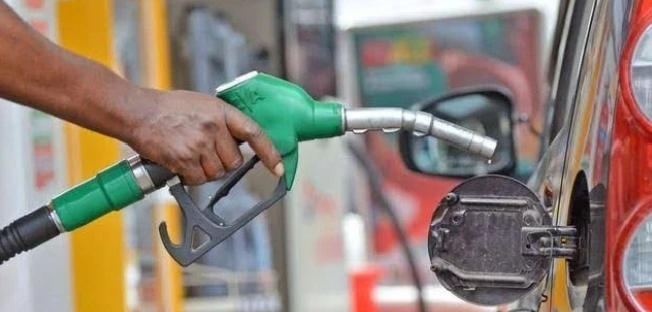
The Federal Competition and Consumer Protection Commission (FCCPC) has warned operators in Nigeria’s downstream petroleum sector against taking advantage of consumers by failing to reflect the recent decline in global crude oil prices in their pump prices.
In a statement issued on Sunday, June 28, the Executive Vice Chairman and Chief Executive Officer of the Commission, Tunji Bello, said ongoing surveillance of the downstream petroleum market showed that reductions in gantry prices by local refiners, depot operators, marketers and retail outlets have remained minimal despite the sharp fall in international crude oil prices.
Bello explained that although the Commission does not regulate petrol prices in Nigeria’s deregulated downstream sector, it has the statutory responsibility to ensure fair competition and protect consumers from exploitative business practices under the Federal Competition and Consumer Protection Act (FCCPA), 2018.
He warned that the Commission would not hesitate to investigate and sanction any operator found engaging in anti-competitive, deceptive or exploitative conduct.
“To be clear, the Commission does not regulate or approve petroleum prices in a deregulated downstream market. Our responsibility under the Federal Competition and Consumer Protection Act, 2018, is to promote competitive markets, prevent anti-competitive conduct, and protect consumers from unfair, deceptive and exploitative business practices.
“We are concerned that while dealers often respond swiftly by increasing pump prices whenever crude oil prices rise, it is taking far too long for consumers to enjoy corresponding reductions now that global crude prices have fallen. Competitive markets must operate fairly in both directions,” Bello stated.
According to him, international crude oil prices have dropped significantly to about 73 dollars per barrel following the ceasefire agreement involving the United States and Iran and the reopening of the Strait of Hormuz, compared to the peak of about 120 dollars per barrel recorded in April during heightened tensions in the Middle East.
The FCCPC noted that crude oil prices have effectively returned to their February levels, yet domestic fuel prices have not experienced a comparable reduction.
The decline in global oil prices followed the easing of geopolitical tensions, including the ceasefire between Israel and Iran and the reopening of the strategic Strait of Hormuz shipping route.
At the peak of the conflict, petrol prices in Nigeria surged to between ₦1,350 and ₦1,500 per litre, while diesel sold for about ₦2,000 per litre.
However, despite the easing of tensions and lower crude prices, petrol continues to retail for around ₦1,200 per litre in many parts of the country.
Industry observers believe that if global market conditions remain stable and competition functions effectively, the pump price of petrol could fall below ₦1,000 per litre in the coming weeks.