

Tinubu Reaffirms Role of Traditional Rulers in Governance, Grassroots Development
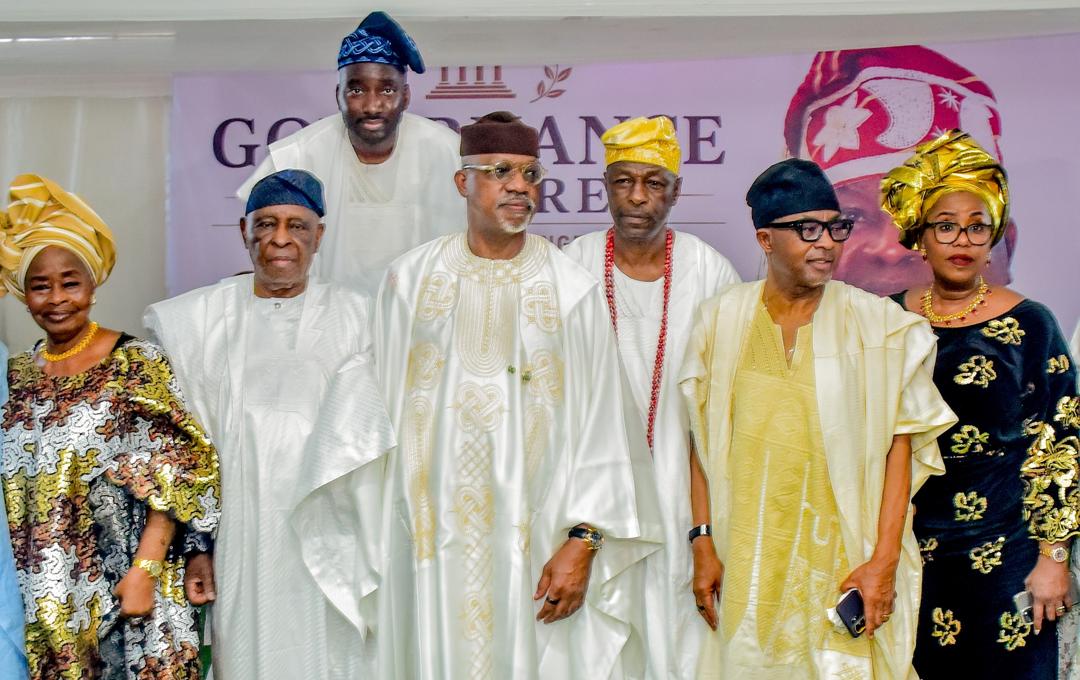
President Bola Ahmed Tinubu has reiterated his administration’s commitment to strengthening traditional institutions in Nigeria, describing royal fathers as critical partners in governance, peacebuilding, and grassroots development.
The President made this known on Saturday May 9, during the final farewell and reception held in honour of the late Oba Sikiru Kayode Adetona at the Dipo Dina Stadium.
Represented by Prince Dapo Abiodun, President Tinubu stated that the Renewed Hope Agenda had deliberately repositioned traditional rulers from ceremonial figures to active stakeholders in governance, conflict resolution, economic mobilisation, and national development.
According to the President, the Federal Government envisions a Nigeria where traditional institutions are recognised as vital partners in preserving cultural heritage, promoting peace, and strengthening social harmony at the grassroots level.
“Our vision is clear — a Nigeria where traditional institutions are recognised as critical stakeholders in promoting peace, preserving values, strengthening harmony, and advancing grassroots development,” Tinubu stated.
He noted that monarchs possess indigenous intelligence, moral authority, and social legitimacy that modern governance structures cannot easily replace, adding that their contributions remain crucial in addressing contemporary national challenges.
Tinubu observed that while the 1963 Constitution accorded traditional institutions significant relevance within Nigeria’s governance structure, subsequent constitutional arrangements weakened their influence and reduced synergy between governments and grassroots leadership.
He assured that his administration would continue supporting ongoing conversations at the National Assembly aimed at assigning clearer constitutional responsibilities to traditional rulers.
“This is not about politics; it is about strengthening governance, deepening inclusion, and recognising an institution that has sustained social order for centuries,” he added.
The President further disclosed that the Federal Government had sustained consultations with traditional and religious leaders through the National Council of Traditional Rulers of Nigeria on issues relating to national security, communal peace, economic growth, and social stability.
Tinubu charged monarchs across the country to remain at the forefront of peacebuilding amid prevailing security challenges, urging them to make their palaces centres of reconciliation, wisdom, and conflict resolution.
He also encouraged traditional rulers to strengthen community-based security structures through intelligence gathering, early warning mechanisms, and local vigilance efforts.
The President urged royal fathers to guide young people away from violence, extremism, drug abuse, and other social vices, stressing that Nigeria’s cultural heritage should be treated as strategic assets for future development rather than relics of the past.
Tinubu commended the Oba Sikiru Adetona School of Governance for organising the lecture in honour of the late monarch, whom he described as courageous, disciplined, principled, and committed to integrity throughout his reign.
Speaking on the lecture theme, “Bridging the Gap Between Traditional Institutions and Modern Government,” the President described the topic as timely and significant to Nigeria’s democratic evolution.
“The theme speaks to one of the most important governance questions of our time — how to harmonise the authority of our ancestral institutions with the structures of constitutional democracy in advancing national progress,” he said.
In a keynote address, former President Olusegun Obasanjo described the late Awujale as a foremost traditional ruler whose influence extended far beyond Ijebuland.
Represented by Architect Abiodun Fari-Arole, Obasanjo said the late monarch was a close ally, peace advocate, and champion of justice and fairness.
He noted that Oba Adetona would be remembered for championing reforms in Ogun State’s Traditional and Obas Law, particularly the provision granting monarchs the right to determine their burial rites before death.
Also speaking during another lecture session titled “A Dialogue for a Stronger Future,” Sheikh Mustapha Bello stressed the importance of culture and traditional institutions in driving socio-economic development.
According to him, culture defines the identity and history of a people and should therefore play a central role in governance and policy formulation.
Sheikh Bello maintained that traditional rulers should be actively consulted in policy implementation because they represent the authentic voice of the grassroots.
“Let there be specific roles for the Obas. They are deeply rooted in the traditions and culture of our people. Many of them are highly experienced, and their contributions can greatly assist government in formulating policies and initiatives that directly benefit the people,” he stated.
Global Mirror News reports that the event attracted prominent political leaders, royal fathers, religious figures, and dignitaries from across the country who gathered to honour the enduring legacy of the late Awujale of Ijebuland.