

Tinubu Unveils Plan for Nigeria to Become Africa’s Aviation Manufacturing Powerhouse
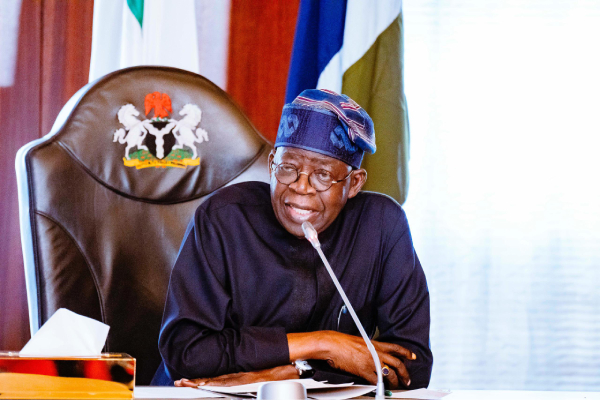
Nigeria is preparing to commence the manufacturing of aircraft components as part of a broader strategy to position the country as West and Central Africa’s leading aviation hub, President Bola Ahmed Tinubu has announced.
Represented by the Secretary to the Government of the Federation (SGF), George Akume, at the maiden Nigerian International Airshow on Tuesday, the President said the initiative will anchor Nigeria firmly within the global aviation value chain.
Tinubu described the event as “a historic milestone” that places Nigeria among Nations capable of hosting International-standard aviation showcases comparable to Farnborough, Paris, and Dubai. According to him, Nigeria’s Aviation journey has evolved “from humble beginnings to Global ambitions.”
The President projected strong industry growth, noting that aviation sector revenue currently on a steady rise, is expected to reach $2.56 billion by 2029, while passenger traffic is projected to surge from 15.89 million in 2023 to 25.7 million within the same period.
To support this growth, Tinubu said the Federal Government is executing massive infrastructure upgrades, including a ₦712 billion modernisation of the Murtala Muhammed International Airport (MMIA), Lagos, alongside ongoing improvements across six major airports and several domestic runways.
He revealed that Nigeria now ranks first in Africa for compliance with international aviation standards, after improving its Cape Town Convention score from 49.5% to 75.5%—a development he said enables airlines to access low-cost aircraft financing and boosts global investor confidence.
As part of efforts to reduce capital flight, Tinubu disclosed that Nigeria has secured agreements with Boeing and Cranfield University for the establishment of state-of-the-art Maintenance, Repair and Overhaul (MRO) facilities, which are expected to significantly cut the $200 million currently spent on foreign maintenance.
“Aero Contractors and XEJet are already leading this new phase, with dedicated hubs in Lagos and Abuja,” he said.
The President also highlighted a renewed wave of international flight activity, including the resumption of Air Peace’s Lagos–London route, the signing of fresh Bilateral Air Services Agreements (BASAs), and the return of Emirates and Uganda Airlines to the Nigerian market. Aviation, he noted, now contributes 2.5% to Nigeria’s GDP.
Tinubu reaffirmed the nation’s long-term goal of becoming a dominant aviation hub, supported by public-private partnerships, expanded training facilities, and emerging plans for the local production of aircraft components.
“We are building a sustainable ecosystem that creates jobs, drives innovation, and strengthens our economy,” he said.
In his foreword for the Airshow’s inaugural magazine, Minister of Aviation and Aerospace Development, Festus Keyamo, described the event as bold and transformative.
“This is our first attempt. It will not be perfect. We are taking baby steps, but we take them with courage, conviction, and clarity of purpose,” Keyamo said, adding that the Nigeria International Airshow would, in time, stand “shoulder to shoulder with Paris, Dubai, Farnborough, and Singapore.”
Keyamo listed ongoing achievements in the sector, including enhanced safety and security systems, ongoing airport modernisation, improved aircraft leasing frameworks, and digitalisation of the nation’s airspace. He also outlined plans to deepen private-sector participation through concessions and PPPs in cargo terminals, aviation city projects, and maintenance facilities.
“This Airshow is more than an event; it is a statement of intent,” he said. “It is a bold declaration that Nigeria is ready to lead, innovate, and compete on the global stage.”