West African Leaders Convene in Abuja as Fresh Coup Threats Test Regional Unity
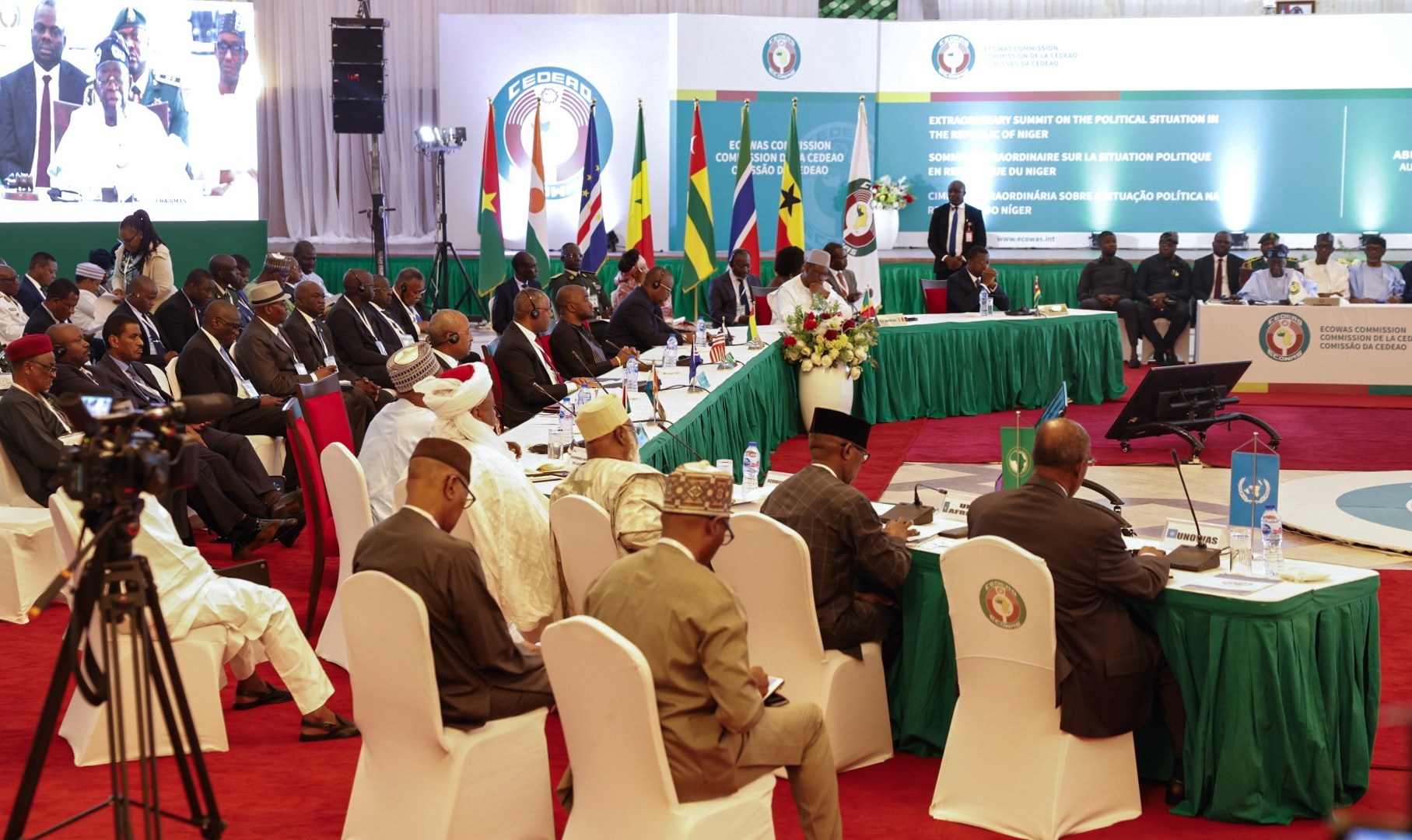
Presidents and Senior Government Officials from across West Africa gathered in Abuja on Sunday for a crucial regional summit, as renewed coup attempts once again placed the region’s fragile democratic order under intense scrutiny.
The high-level meeting, convened under the Economic Community of West African States (ECOWAS), came against the backdrop of a successful military takeover in Guinea-Bissau in November and a foiled coup attempt in neighbouring Benin just a week ago.
The developments have reignited concerns within the regional bloc, which only recently began recovering from a wave of coups that swept through Burkina Faso, Guinea, Mali and Niger between 2020 and 2023.
Speaking at the opening ceremony of the heads of State Summit, ECOWAS Commission President, Alieu Touray, stressed the importance of collective action in the face of growing instability.
“The events of the last few weeks have shown in concrete terms what regional solidarity means,” Touray said, underscoring the bloc’s determination to respond decisively to unconstitutional changes of Government.
The summit, held in a heavily secured conference hall within the serene Aso Rock Presidential Villa complex, had been scheduled before the latest coup attempts. However, the evolving security situation ensured that political instability dominated discussions.
According to the official programme, leaders deliberated on the findings of a recent ECOWAS mission to Guinea-Bissau, assessed “the situation in the Republic of Benin,” and reviewed ongoing trade liberalisation efforts within the sub-region. An update on Guinea’s transition process was also tabled.
Security in the Sahel emerged as another major priority. Jihadist insurgencies continue to rage across Burkina Faso, Mali and Niger—three Countries now under military rule and no longer members of ECOWAS after forming the Alliance of Sahel States (AES).
Touray last week called for renewed negotiations with the AES to address shared security challenges, as violence increasingly spills southward.
Sierra Leone President Julius Maada Bio, who currently holds ECOWAS’s rotating Chairmanship, warned that no country is immune. “No border can insulate us from violence,” he told fellow leaders.
Notably absent from the summit were the Heads of State of Guinea and Guinea-Bissau, both suspended from ECOWAS following Military takeovers. Nigerian President Bola Ahmed Tinubu was also not in attendance, delegating representation to Vice President Kashim Shettima.
Beyond Military interventions, leaders also acknowledged the broader challenge of democratic backsliding across the region. In October, Ivory Coast’s President Alassane Ouattara secured a controversial fourth term after key rivals were barred from contesting.
Elections in Sierra Leone and Nigeria in 2023, won by Bio and Tinubu respectively, were similarly marred by allegations of irregularities—highlighting the complex political pressures confronting West Africa’s democracies.