
Scientists Build AI Model to Predict Diseases Years Ahead
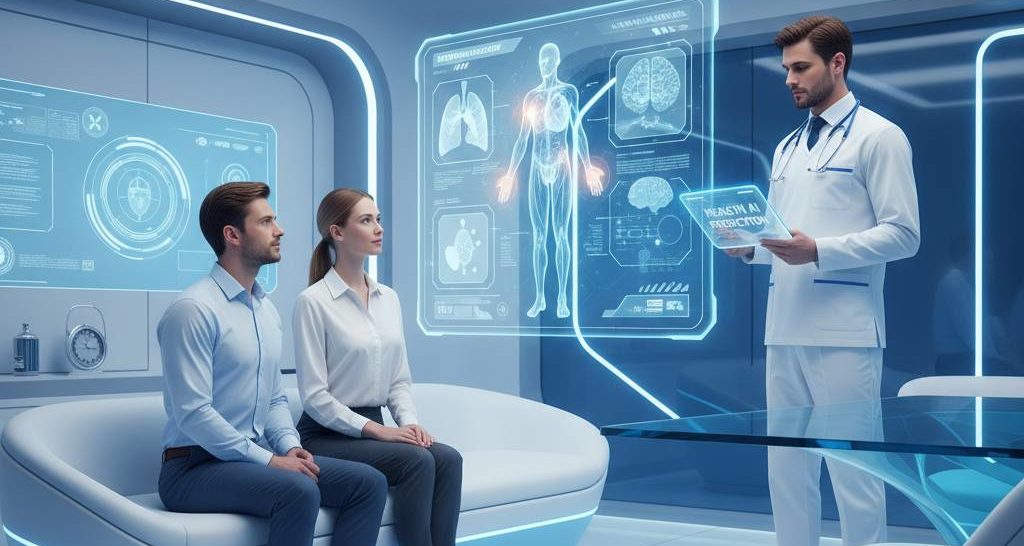
A groundbreaking Artificial Intelligence (AI) model capable of predicting future illnesses/diseases years before they appear has been unveiled by an International team of scientists from the United Kingdom, Denmark, Germany, and Switzerland.
The system, known as Delphi-2M, was trained on the vast UK Biobank, which holds genetic and health data of nearly half a million participants.
It was later tested against almost two million medical records from Denmark, proving its ability to forecast the likelihood of more than 1,000 diseases, including heart attacks, with remarkable accuracy.
According to the researchers, Delphi-2M works much like advanced chatbots such as ChatGPT, but instead of generating text, it processes sequences of medical histories, genetic information, and clinical records to predict potential health risks.
A New Frontier in Preventive Medicine
The model’s strength lies in its ability to identify patterns in how diseases develop over time.
Moritz Gerstung, a leading researcher at the German Cancer Research Center, explained that the AI learns “the grammar” of medical diagnoses, spotting connections between earlier health events and future risks.
If fully developed, experts believe Delphi-2M could revolutionise preventive healthcare worldwide by:
Alerting doctors and patients to hidden risks long before symptoms appear.
Improving resource allocation in hospitals and clinics by directing attention to those most at risk.
Encouraging healthier lifestyles through early warnings and tailored interventions.
Ethical Concerns and Limitations
Despite the promise, scientists caution against rushing the technology into hospitals.
Current data used to train the model comes mostly from Europe, raising concerns that it may not accurately represent other populations, particularly Africans and other underrepresented groups.
Experts warn that unless datasets from countries like Nigeria are included, predictions may overlook genetic, lifestyle, and environmental factors unique to local populations.
Transparency is another challenge—clinicians and patients must be able to understand how the AI arrives at its conclusions before it can be trusted in real-world care.
Nigerian Context
Health analysts say innovations like Delphi-2M could be a game-changer for Nigeria, where late detection of diseases such as cancer, hypertension, and diabetes continues to strain families and hospitals.
If adapted to local realities, such tools could strengthen Nigeria’s healthcare system by shifting focus from treatment to prevention.
Ewan Birney, one of the project’s contributors, noted that the model is still in its early stages, but with global collaboration, it could eventually be tailored to benefit diverse populations across continents.