

Ramadan Concern: Senate Cuts Election Notice Period to 300 Days for 2027 Polls
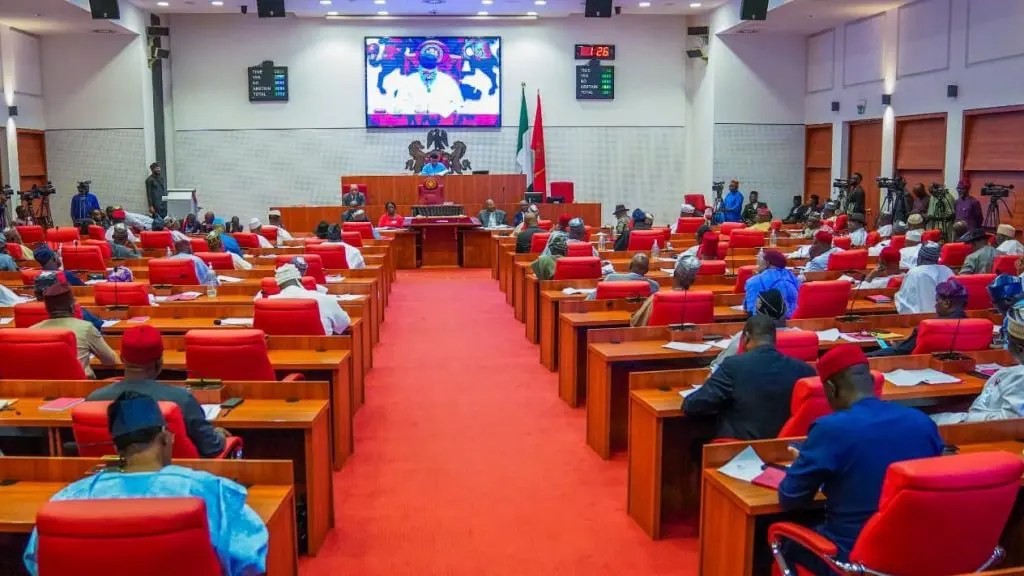
The Senate has amended Clause 28 of the Electoral Act Amendment Bill, reducing the statutory notice period for elections from 360 days to 300 days, a move aimed at preventing a clash between the 2027 general elections and the Ramadan fasting period.
Global Mirror News reports that the adjustment grants the Independent National Electoral Commission (INEC) greater flexibility in fixing dates for the 2027 Presidential and National Assembly elections, potentially allowing them to be scheduled between December 2026 and January 2027.
Under the revised Clause 28, “the Commission shall, not later than 300 days before the day appointed for holding of an election under this Bill, publish a notice in each State of the Federation and the Federal Capital Territory – stating the date of the election; and (b) appointing the place at which nomination papers are to be delivered.”
The amendment emerged during clause-by-clause consideration of the reworked Electoral Act Amendment Bill after Senate Leader, Opeyemi Bamidele, moved a motion for the rescission and recommittal of the Electoral Act, 2022 (Repeal and Enactment) Bill, 2026.
Bamidele explained that a review of the earlier passed bill revealed that retaining the 360-day notice requirement could result in the 2027 Presidential and National Assembly elections being conducted during Ramadan.
He cautioned that holding elections within the fasting period could negatively impact voter turnout, logistics management, stakeholder engagement and the overall credibility and inclusiveness of the electoral process.
The motion for rescission also identified discrepancies in the long title and several clauses of the bill, including Clauses 6, 9, 10, 22, 23, 28, 29, 32, 42, 47, 51, 60, 62, 64, 65, 73, 77, 86, 87, 89, 93 and 143, noting issues related to cross-referencing, numbering and internal consistency.
Earlier proceedings were briefly disrupted as lawmakers commenced detailed consideration of the Electoral Act, 2022 (Repeal and Re-Enactment) Bill 2026, following the motion to rescind the earlier amendment.
The motion was seconded, paving the way for the Senate to dissolve into the Committee of the Whole for reconsideration.
Global Mirror News gathered that tensions heightened when Senate President Godswill Akpabio read through the clauses and Senator Enyinnaya Abaribe raised a point of order at Clause 60, prompting consultations among lawmakers and a subsequent closed-door session.
Upon resumption of plenary, disagreements resurfaced over Abaribe’s demand for a division on Clause 60. While Akpabio suggested the demand had been withdrawn, opposition senators insisted otherwise.
Citing Order 52(6), Deputy Senate President Barau Jibrin argued that it would be procedurally improper to revisit a matter already ruled upon by the Senate President.
The development led to further exchanges, including a brief confrontation between Senator Sunday Karimi and Abaribe.
However, Bamidele maintained that his motion for rescission effectively nullified previous decisions, insisting that Abaribe’s request was procedurally valid.
Akpabio subsequently upheld the point of order, after which Abaribe formally moved his motion pursuant to Order 72(1), seeking a division on Clause 60(3).
The clause addresses the transmission of election results and contains a proviso permitting manual transmission where electronic transmission fails.
Abaribe sought the deletion of the proviso allowing manual transmission in the event of network failure.
During voting, senators supporting retention of the proviso were asked to stand, followed by those opposed. Fifteen opposition senators voted against retaining the provision, while 55 senators voted in support.
The Senate thereafter passed the Electoral Act, 2022 (Repeal and Re-Enactment) Bill, 2026.