N5bn Partnership: Ogun, World Bank Scale Up Women Empowerment, Power, Economic Recovery
The Ogun State Government and the World Bank Group have invested more than ₦5 Billion over the past six years to strengthen women’s livelihoods, expand financial inclusion, and accelerate post-pandemic economic recovery, Governor Dapo Abiodun has announced.
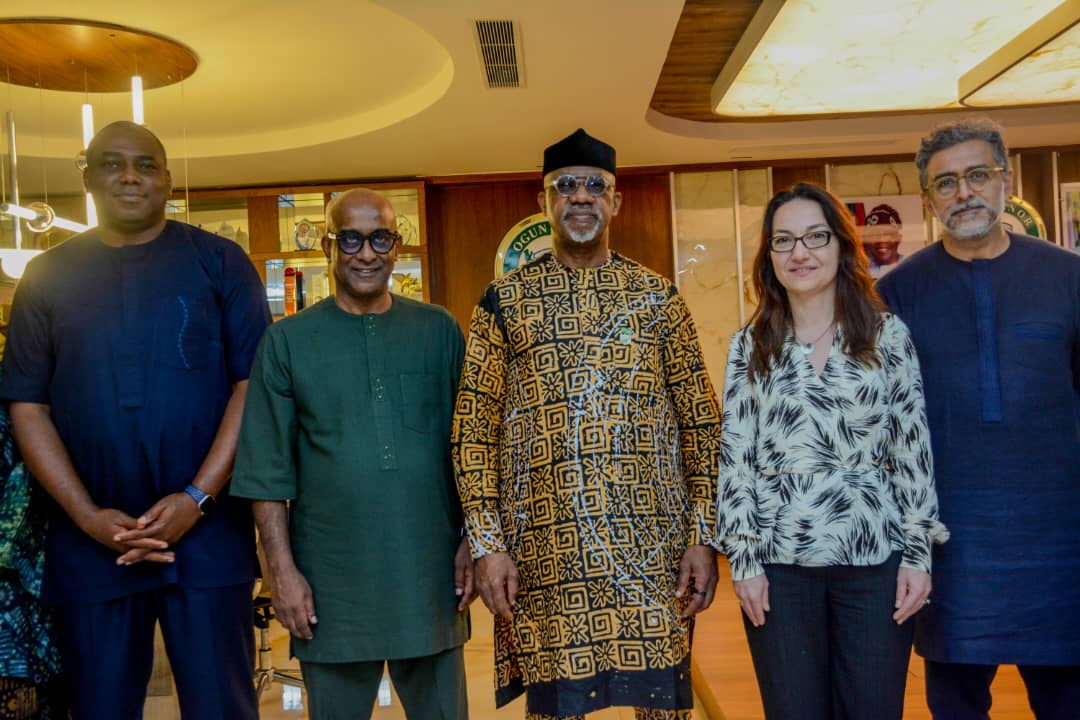
The Governor disclosed this on Wednesday January 28, in Abeokuta while hosting a World Bank delegation led by its Vice President, Ms. Galina Vincelette, describing the partnership as a cornerstone of the State’s inclusive growth strategy.
According to Abiodun, the funding was delivered through the World Bank–backed Nigeria for Women Project (NFWP) and Ogun State’s locally adapted empowerment scheme, Oko’Owo Dapo, which was launched to scale up the gains of the initial programme.
Implemented through Women Affinity Groups (WAGs), the NFWP has helped thousands of women access finance, build leadership capacity, and acquire basic accounting and enterprise skills.
The Governor said about ₦3 billion came from the World Bank initiative, complemented by ₦2 billion from the state Government.
“In total, roughly ₦5 Billion has gone into a livelihood programme that has deepened social cohesion and transformed women’s economic participation,” Abiodun said, adding that Oko’Owo Dapo has now empowered about 55,000 women across the State.
Beyond gender-focused interventions, the governor highlighted the impact of OGCARES—the Ogun State COVID-19 Action Recovery and Economic Stimulus Programme—crediting it with strengthening household resilience and supporting food system recovery during and after the pandemic.
He also pointed to steady progress under the Ogun State Economic Transformation Project (OGSTEP), citing advances in skills development, agricultural productivity, and land administration reforms, including faster issuance of Certificates of Occupancy.
Under the Rural Access and Agricultural Marketing Project (RAAMP), Ogun State is upgrading approximately 209 kilometres of rural roads to improve farm-to-market connectivity, reduce transport costs, and boost agricultural output.
In a major infrastructure push, Abiodun revealed that the State would soon Commission its Electricity Distribution Company, part of a broader strategy to improve power supply and drive industrial growth.
Ogun State has established an Electricity Board and is pursuing multiple Independent Power Projects (IPPs), alongside plans to roll out mini-grids across the state.
“Power is the single biggest enabler of economic activity. With the new constitutional framework, states can now generate, transmit, and distribute electricity, and we are leveraging that opportunity,” the Governor said.
Responding, World Bank Vice President Galina Vincelette reaffirmed the institution’s commitment to supporting Ogun State and Nigeria in tackling development challenges, with a focus on public-private solutions, particularly in the energy sector, and sustained investment in human capital.
World Bank Country Director for Nigeria, Matthew Verghis, disclosed that the Bank is developing a new Country Partnership Framework for Nigeria, prioritising job creation as a pathway to poverty reduction.
“Jobs are the most sustainable route to higher incomes and lower poverty,” Verghis said, noting that Nigeria’s World Bank portfolio now stands at $17 billion, one of the largest globally, with ongoing support for programmes such as the Nigeria for Women Project.