
Lagos Unveils Robust Traffic Plan as 64-Day Rehabilitation Begins on Lekki–Epe Expressway
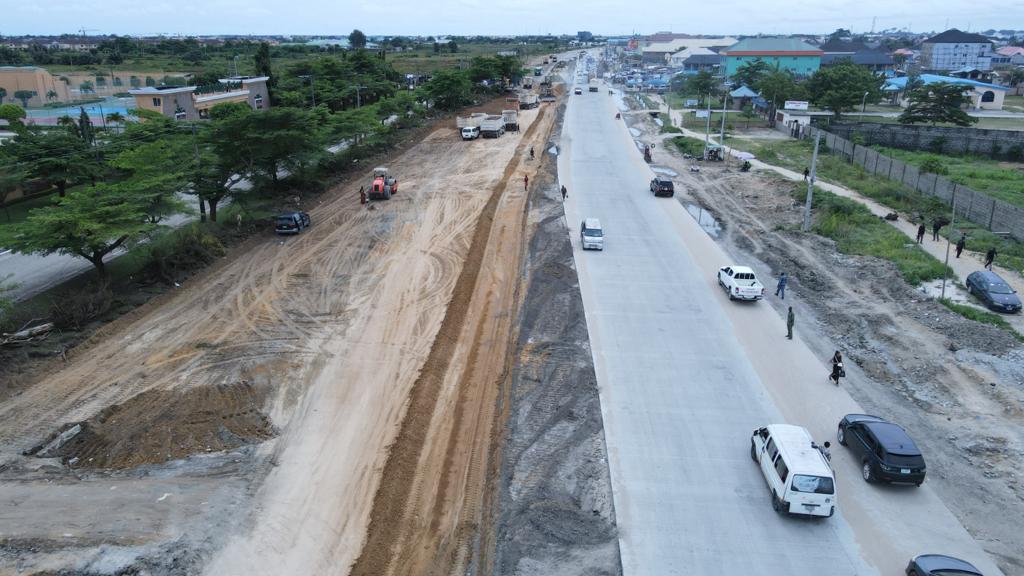
The Lagos State Government has rolled out an extensive traffic management and safety strategy as rehabilitation work officially begins on the strategic Lekki–Epe Expressway, a major economic artery linking Lagos to key industrial and commercial hubs.
State authorities confirmed that the 20-kilometre rehabilitation project, scheduled to run for 64 days, will be executed without a total shutdown of the expressway. Instead, carefully coordinated traffic control measures will be implemented to ensure continuous vehicular movement and minimise disruption to commuters and businesses.
Speaking on Tuesday, the Special Adviser to Governor Babajide Sanwo-Olu on Transportation, Sola Giwa, said the government is determined to balance infrastructure renewal with mobility and public safety. He noted that traffic interventions will be applied selectively at critical junctions rather than through blanket road closures.
To support the plan, more than 305 operatives of the Lagos State Traffic Management Authority (LASTMA) have been deployed across three reinforced traffic management zones along the Lekki–Epe corridor.
According to Giwa, the enhanced deployment is aimed at maintaining traffic flow, enforcing road discipline, and ensuring swift response to incidents throughout the rehabilitation period.
He attributed the heavy traffic pressure on the corridor to the rapid expansion of high-impact infrastructure and investments, including the Lekki Deep Sea Port, Lekki Free Trade Zone, Dangote Refinery, and several emerging industrial and residential developments. These assets, he said, have significantly increased haulage and commuter traffic in the area.
In anticipation of vehicle breakdowns and emergencies, LASTMA has positioned a range of high-, medium- and low-capacity recovery vehicles, including tow trucks, to quickly clear obstructions and prevent secondary congestion.
In a move reflecting Lagos’ growing adoption of smart-city solutions, Giwa disclosed that drone technology will be deployed for real-time aerial surveillance, enabling faster detection, assessment, and resolution of traffic incidents on the Lekki–Epe Expressway and other strategic routes across the state.
The traffic management framework also includes the installation of directional signage, improved street lighting, and other essential safety infrastructure to guide motorists and enhance visibility during the construction period.
To further strengthen security and orderliness, operatives of the Rapid Response Squad (RRS) and the Kick Against Indiscipline (KAI) brigade have been deployed to support LASTMA, safeguard lives and property, and curb traffic-related violations.
Motorists have been advised to explore alternative routes to ease congestion along the construction corridor. Giwa specifically recommended the Coaster Road from Ogombo through Abraham Adesanya as a practical option during the rehabilitation.
He appealed to road users for patience and cooperation, stressing that adherence to traffic rules and collective responsibility are critical to the success of the project.
Members of the public were also encouraged to report traffic incidents via LASTMA’s toll-free hotline 080000527862, with assurances of prompt and professional intervention.
The Lagos State Government called for residents’ understanding, describing the rehabilitation as a vital investment in mobility, road safety, and long-term economic sustainability for Africa’s largest city.