

Lagos Lawmakers Step In to Halt Makoko Demolition as Rights Concerns Mount
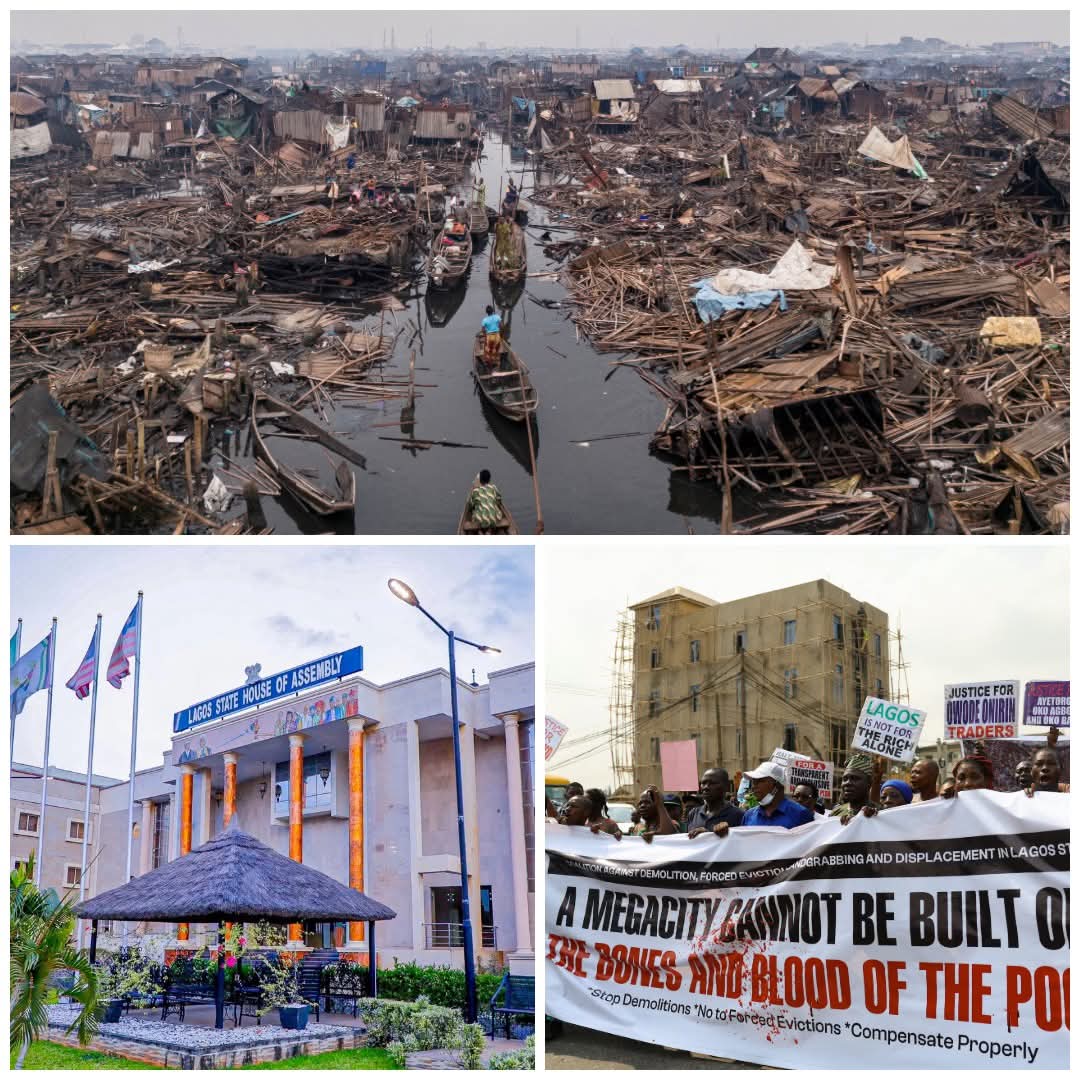
The Lagos State House of Assembly has ordered an immediate suspension of the ongoing demolition of structures in Makoko, a sprawling waterfront settlement in Nigeria’s commercial capital, following growing domestic and international concern over forced evictions and housing rights.
The legislative intervention came after residents of Makoko and adjoining waterfront communities petitioned lawmakers over the sudden clearance of homes, which reportedly left thousands displaced without prior notice or resettlement arrangements.
Acting through an ad hoc committee, the Assembly directed relevant ministries, departments, and agencies of the Lagos State Government to halt all demolition activities pending further review.
Speaking after a closed-door engagement with community representatives, lawmakers stressed that urban renewal efforts must balance public safety, environmental considerations, and the fundamental rights of residents.
The Assembly further resolved that residents whose homes had already been demolished should be adequately compensated, while a comprehensive report on the exercise is submitted for legislative scrutiny.
Makoko, often described by International observers as the “Venice of Africa” due to its stilted wooden houses built over the Lagos Lagoon, has long existed at the intersection of informality and state regulation. Over the years, successive governments have struggled to reconcile development ambitions with the realities of a community estimated to house tens of thousands of low-income residents, many of whom rely on fishing and informal trade for survival.
The Lagos State Government has defended the demolition exercise, arguing that many of the affected structures were erected under high-tension power lines and posed serious safety risks. Officials have maintained that the clearance was part of a broader urban safety and regeneration strategy, insisting that the move was not targeted at Makoko residents specifically but aimed at preventing avoidable disasters.
However, human rights organisations, urban planners, and civil society groups have criticised the approach, warning that forced evictions without clear resettlement plans undermine global commitments to inclusive urban development.
They argue that Makoko’s situation reflects a wider challenge facing rapidly expanding cities across Africa and the Global South, where informal settlements often bear the brunt of redevelopment policies.
With the Assembly’s directive now in place, attention has shifted to how Lagos authorities will reconcile development goals with social protection obligations.
Observers say the outcome could set a critical precedent for how Africa’s megacities manage informal communities amid accelerating urbanisation and climate pressures.