

FG Confirms January 1, 2026 Rollout of Sweeping Tax Reforms, Rules Out Further Delays
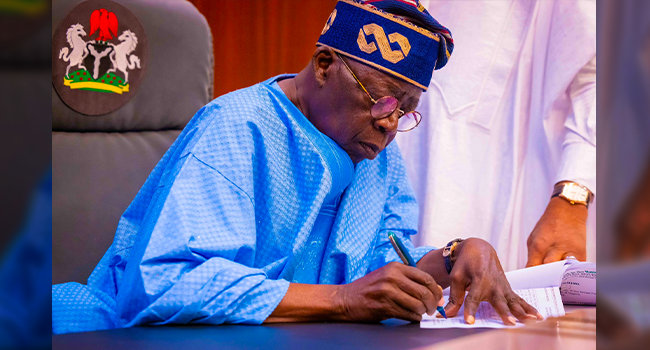
The Federal Government has reaffirmed that Nigeria’s far-reaching tax reforms will officially take effect on January 1, 2026, dismissing renewed calls for postponement and insisting that preparations are on course.
The confirmation followed a high-level meeting between President Bola Ahmed Tinubu and members of the Tax Implementation Committee on Friday, December 26, 2025.
Chairman of the Presidential Committee on Fiscal Policy and Tax Reforms, Taiwo Oyedele, disclosed the decision in a video shared by the President’s Media Centre on X.
Oyedele said the final phase of implementation would cover the Nigeria Tax Act and the Nigeria Tax Administration Act, stressing that both laws are designed to provide broad-based relief for Nigerians, particularly low-income earners and small businesses.
According to him, the reforms are “pro-people” and structured to shift the tax burden away from vulnerable groups while stimulating economic growth.
He noted that Government projections show that about 98 per cent of Nigerian workers and 97 per cent of small businesses will either be fully exempt from taxes or experience significant reductions in their tax liabilities.
“The plans to commence the remaining two laws on January 1, 2026, will go ahead because the reforms are designed to provide relief for the majority of Nigerians,” Oyedele said.
He explained that under the new regime, the bottom 90 per cent of salaried workers will either be exempt from Pay-As-You-Earn (PAYE) tax or pay substantially less.
In addition, about 97 per cent of small businesses will be exempted from Corporate Income Tax, Value Added Tax (VAT), and Withholding Tax, while larger companies will benefit from reduced tax rates.
Oyedele added that the reform process had been thorough, noting that the tax bills underwent a nine-month legislative review at the National Assembly between October 2024 and June 2025.
Since Presidential assent, the committee has spent the past six months on capacity building, system upgrades and public sensitisation to ensure a smooth rollout.
While acknowledging that tax reforms require continuous refinement, Oyedele said the Government remains committed to improving the framework as implementation begins.
The confirmation cements the Tinubu administration’s resolve to press ahead with one of its most ambitious economic reform programmes, as Nigerians await its impact from 2026.