
Coup Bid Crushed in Guinea-Bissau
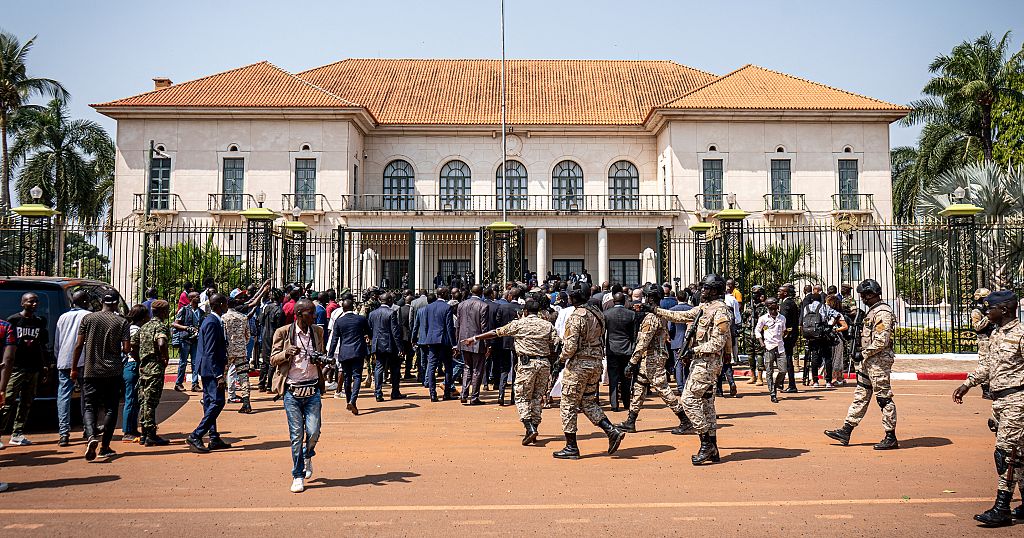
Guinea-Bissau’s fragile democracy was rocked this week when the Army announced the arrest of several Senior Military Officers accused of plotting a coup.
The announcement, made by the Army’s Deputy Chief of Staff, Gen. Mamadu Ture, came just weeks before the Nation’s Presidential and Legislative Elections, raising questions about the delicate balance of power in the small West African State.
“The arrests were necessary to prevent threats to our constitutional order and to ensure a free and fair electoral process,” Gen. Ture said in a brief statement.
While the Government has withheld the exact number of detainees, reports indicate that Brig. Gen. Daba Nawalna, head of a key military training center near the capital, is among those held.
Observers say the operation targeted officers with significant influence within the military hierarchy.
President Umaro Embaló, who is seeking re-election, has long faced tension with the armed forces, a legacy of Guinea-Bissau’s turbulent political history.
Since gaining independence from Portugal in 1974, the Country has seen repeated coups, mutinies, and periods of political instability, often with the Military acting as kingmaker.
Political analyst Fatoumata Sanyang notes, “The Military remains a central power broker here. Arresting key officers now is a clear signal that the presidency will tolerate no deviation from its agenda.”
The timing of the arrests is particularly notable, coinciding with the campaign period. The main opposition party has already been disqualified from the elections, further tilting the political landscape in favor of the incumbent.
Regional experts have raised concerns that while the arrests may prevent an immediate disruption, they do not resolve the deeper structural issues that allow the Military to exercise outsized political influence.
West Africa has witnessed a resurgence of Military interventions in recent years, including coups in Mali, Burkina Faso, Niger, and neighboring Guinea.
In this context, Guinea-Bissau’s swift action is being interpreted both as a warning to internal dissenters and as a preventive measure against a wider destabilization.
As the Country moves toward elections, the coming weeks will test whether Guinea-Bissau can hold a peaceful vote and begin the difficult process of recalibrating civilian-military relations.
Analysts warn that unless the military’s political role is systematically addressed, these cycles of tension and preemptive crackdowns are likely to continue.