
Abiodun Urges Muslims to Reflect Ramadan Values Through Compassion, Service

The Ogun State Governor, Dapo Abiodun, has urged Muslims to allow the spiritual lessons of Ramadan to shape their daily lives by demonstrating compassion, generosity, and service to humanity.
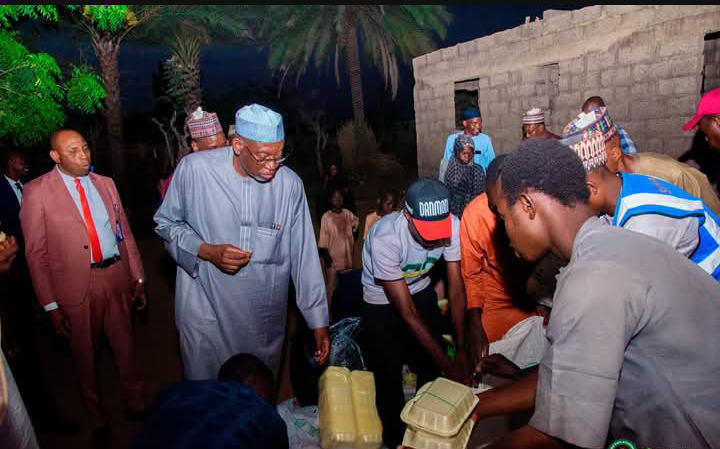
Governor Abiodun made the call during a Ramadan Special Iftar organised by the Ogun State Government with the theme, “An Islamic Path to Societal Re-orientation,” held at the Arcade Ground, Governor’s Office, Oke-Mosan, Abeokuta.
Speaking at the event, the Governor encouraged Muslims across the state to support the poor, uplift the vulnerable, and extend kindness to people around them, noting that communities become stronger and more peaceful when citizens care for one another.
He described Ramadan as more than a religious ritual, emphasising that the holy month provides an opportunity for spiritual renewal, discipline, and the cultivation of moral values.
Abiodun also commended Muslim clerics for their continued guidance and leadership, noting that their teachings help strengthen the moral foundations of society while promoting peace and unity within communities.
According to him, the insights shared by Islamic scholars during the programme highlight the need for moral renewal in society.
“Our society can only be renewed when our values, character, and commitment to justice, compassion, and integrity are strengthened,” the governor said.
He described the theme of the lecture as timely, stressing that societies around the world are grappling with growing moral and social challenges that require collective reflection and commitment to ethical principles.
The Governor identified issues such as dishonesty, intolerance, the erosion of family values, and declining civic responsibility as challenges that require urgent attention.
Abiodun noted that religious leaders play a critical role in shaping societal values through sermons, teachings, and spiritual guidance, helping to nurture the moral consciousness of communities.
He also praised the tradition of religious harmony in Ogun State, where Muslims, Christians, and adherents of other faiths have coexisted peacefully for generations.
The Governor further acknowledged the leadership of Nigeria’s President, Bola Ahmed Tinubu, stating that his public life reflects a commitment to faith, compassion, and service to humanity.
According to Abiodun, the president’s dedication to justice, tolerance, and inclusiveness continues to inspire Nigerians while guiding the nation toward stability, growth, and shared prosperity.
The Governor emphasised that Ramadan goes beyond abstaining from food and drink between dawn and sunset, describing it as a period for spiritual purification, self-discipline, and charitable acts.
He added that his administration remains committed to people-focused governance, noting that leadership must prioritise the welfare of citizens alongside infrastructure development and economic growth.
Abiodun explained that this commitment is reflected in his administration’s Building Our Future Together agenda, which focuses on social welfare, youth empowerment, economic development, and inclusive governance.
Delivering a lecture titled “An Islamic Path to Societal Re-orientation,” the Registrar of the Joint Admissions and Matriculation Board, Is-haq Oloyede, expressed concern over what he described as the growing trend of parents abandoning their responsibilities by outsourcing the upbringing of their children.
Oloyede lamented that some universities in Nigeria are gradually turning into “asylums” due to the failure of certain parents to instill discipline and moral values in their children.
He urged Nigerians not to remain silent when they observe behaviours among younger generations that contradict cultural values, particularly respect for elders.
According to him, rebuilding the nation’s educational culture, investing more in education, strengthening family bonds, and ensuring good governance are crucial steps toward achieving meaningful societal re-orientation.
Global Mirror News reports that the Ramadan lecture attracted Islamic scholars, clerics, Government officials, and community leaders who emphasised the need for moral renewal and collective responsibility in building a more ethical and peaceful society.